 SessionTap
Interval recording data sheet
A one-page grid for a 10-minute observation in 10-second intervals: 60 boxes for one behavior and 60 for a second. Tick which method you are using, then mark each interval + or −.
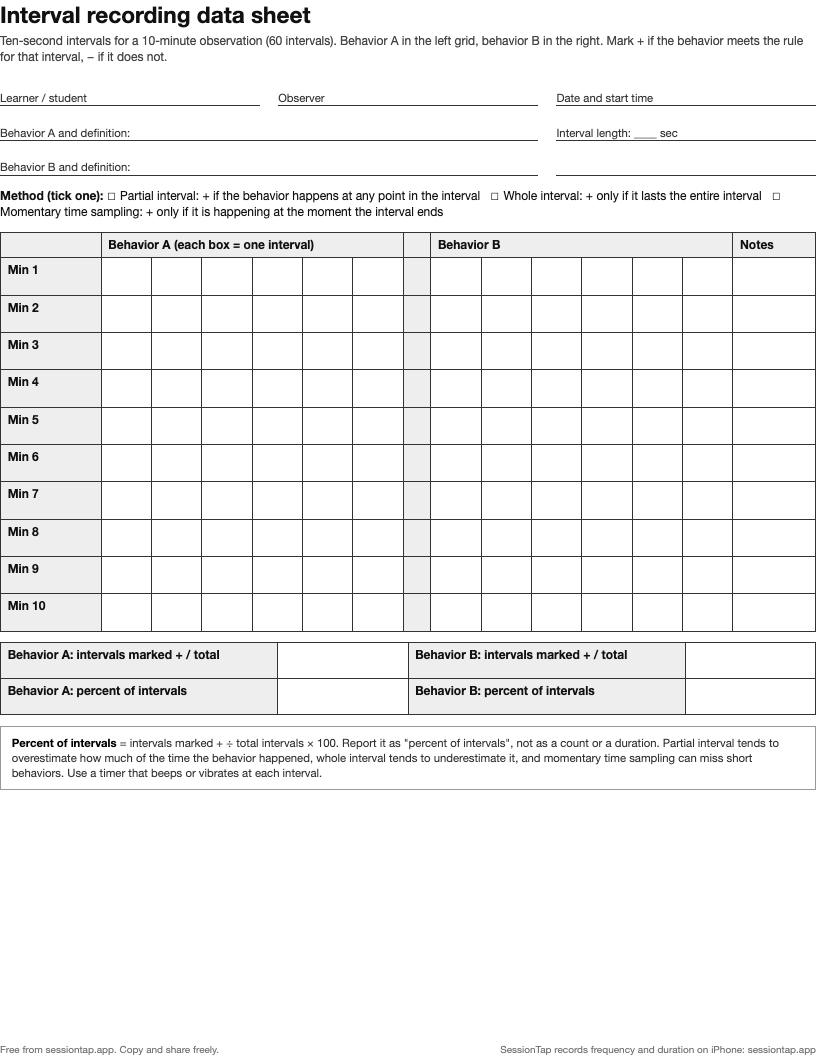
One sheet, three methods
| Method | Mark + when | Tends to |
|---|---|---|
| Partial interval | The behavior happens at any point in the interval | Overestimate how much of the time it happens |
| Whole interval | The behavior lasts the entire interval | Underestimate it |
| Momentary time sampling | The behavior is happening at the moment the interval ends | Miss brief behaviors; works for longer-lasting ones |
The result is the percent of intervals marked +. It is an estimate, not a count or a duration, so report it that way ("on-task in 70% of intervals"), and always compare like with like: the same method and the same interval length.
The partial interval recording guide explains which method suits which kind of behavior and how to pick the interval length.
Practical tips
- Use a timer that vibrates or beeps every interval, so your eyes stay on the person. Many interval timer apps do this; an earbud helps in a quiet classroom.
- With 10-second intervals there is no time to write between them. Some observers use 10 seconds to watch and 5 to record; if you do, write that on the sheet.
- The interval length box lets you use the grid for 15- or 30-second intervals too; the minutes on the left then no longer apply.
Where SessionTap fits
SessionTap does not do interval recording or momentary time sampling yet. It records frequency and duration directly, with a timestamp for every occurrence. If you can count each occurrence or time each episode, that direct measure is usually more exact than an interval estimate, and the app does the arithmetic.